

Limestone Branch Distillery: Stephen Beam

Limestone Branch Distillery with Stephen Beam, Master Distiller


"Our spirit is strong. Our Heritage is real"
“I had already been in the restaurant business with my brother Paul for 10 years, then we decided to open our own distillery. We started the whole process in 2009, in 2010 we incorporated & by 2011 we opened the doors.”
Can you give us a bit of background about yourself and how you started in the whiskey industry?
I like to say that I grew up around the industry as opposed to in the industry. My father got out of the business back in the 40s. He was actually a baseball player, in the Bourbon League, back when each distillery had a team. and he & his brother’s main job was playing on the distillery team, but you had to work for the distillery, so they got the job just to get on that team.
My aunts & uncles & cousins were all in the business. And even my mom peaked my interest when at an early age she would take my brother Paul & me to the Dant Distillery since she was proud of her family heritage. When I graduated from school the whiskey industry was heading down so I pursued a degree in landscape architecture for the first 20 years of my career. But I always kept coming back to distilling, though regulations were still not friendly for starting up a distillery of my own.
Then the internet came around and I did more research, and discovered Dry Fly Distillery in Washington State and Fritz Maytag with Anchor Distilling in San Francisco. These were more on the scale that was available to me. I also went to an ADI Conference in Louisville where Bill Owens really helped me out a lot, and I was just bitten by the bug. I had already been in the restaurant business with my brother Paul for 10 years, then we decided to open our own distillery. We started the whole process in 2009, in 2010 we incorporated & by 2011 we opened the doors.
Can you tell us about your distillery, and what makes it unique?
We started out as a small artisan distillery, and we are still a very tactile one, doing everything by taste & smell. We were using heirloom corn before most other distilleries, and were putting out just a few barrels a month and are now up to about 40 barrels a month.
Once we teamed with LUXCO in 2015, this allowed us to focus more on just producing Bourbon instead of things such as Moonshine to pay the bills. We are also ready to expand and increase our production in 2021.
Are there any little ‘distilling’ secrets you can let us in on?
We use pot stills, instead of column stills which many other Bourbon producers prefer, and are using an old fashion worm-tub instead of condensers. It is my belief that pot stills provide a richer quality spirit before they even hit the barrels.
I, personally, believe that Fall & Winter productions produce a better whiskey here in Kentucky. Low humidity, cooler temperatures- the yeast loves it! Happy yeast makes great whiskey! We also use a proprietary yeast which we were able to revive from residue from our grandfather’s dona jug (an old copper jug to store distilling yeast) some 50 years after the last time he used it!
Whiskey has been phenomenally successful in the United States and around the planet, why do you think this is compared to other spirits?
I think, particularly whiskey, that people started embracing the food culture and started appreciating the handcrafted whiskeys out there. There’s such a devotion to the craft and the history and the heritage.
In your years in the industry, what have been the biggest surprises you have faced?
For me, it was the explosion for the demand of Bourbon. We didn’t get into the business because of that…it just happened around us.
What are the big trends that are affecting the whiskey industry at the moment?
The expansion of demographics – women, young people, minorities, etc. It’s great! It used to be an old man’s drink, something your father or grandfather would drink but now everyone is getting into it.
Are there any interesting stories from your time in the whiskey industry that you could share?
Several of the large distilleries in Kentucky in the 1970s went into the fish industry. Business was in the doldrums and the big producers were looking for another revenue stream (so to speak).
It just seems like everyone from that era has a story about that time, and how all the fish died. It was just the biggest cluster you could imagine! Though I was at a dinner for the KDA when the subject came up, but then a wife of one of the participants turned to tell us, “We don’t talk about the fish!”
What developments in the whiskey industry most excite you?
The development of all the small distilleries having aged whiskeys. There is such a large breadth of profiles & tastes. It’s just amazing! I think it is very exciting!
What do you see as being the future of whiskey in the short term?
Barrel picks from different liquor stores & bars, which give you a curated variety to choose from.
Why do you use the Glencairn Glass in your business and what makes it so special?
It’s obviously a great glass for whiskey, because it channels the aroma up to the nose and the clarity of the glass lets you see the quality of the whiskey. We use the Wee Glencairn Glasses on our tours!
Visit limestone Branch distillery website here


Auld Bride by Judith O'Reilly
The World's favourite whisky glass
I never wanted to come back. Deep down, I knew I shouldn’t and yet, I came here anyway.
The quayside was colder than I’d imagined possible as I clambered off the boat. A wind sweeping in from across from the North Atlantic with one intent, to blow the marrow from my bones and leave them hollow. Even in my thermals and goose down jacket, I shivered.
Everything was arranged. They’d told me a chap called Fergus would be waiting for me. And sure enough, as I looked to the end of the quay, the headlights of a black SUV flashed on and off. I raised my hand in greeting. By rights, I should have started walking towards the car, and yet I stayed rooted to the spot, staring at the cliffs and the churning sea flecked with white foam. The stone houses some way up the road. And I thought about every time my father had warned me that this island was not for me. That nothing good ever came out of this place. Except you, my darling, he’d say. And whatever happened I was never to go back. There’s nothing there for you. Are you clear about that, Elodie? Crystal clear, Daddy, I’d say.
I knew the story of course. My mother had died when I was six months old. A fever, he said. Bereft, my father swaddled me up, packed a suitcase, and left on a supply boat one dawn. His own parents were long since dead and he told no other soul he was leaving.
And throughout my childhood, even into my early twenties, I never wanted to go back to the island. I was never curious. Until my father died, and I saw the job advertised: Marketing manager, Auld Bride Whisky Distillery: £60,000, six weeks holiday, accommodation provided. Only suitable for someone happy at the idea of remote island living, it warned. I liked the outdoors and the occasional whisky, and the job would be a step up from being a marketing assistant. But it wasn’t the money, so much as the idea that took hold. Because my father shouldn’t have done what he did. He shouldn’t have got ill, and he shouldn’t have died, and he certainly shouldn’t have left me. And this right here was his punishment, because now I was standing where he said I shouldn’t ever go. The recklessness of it thrilled me.
Then again, he’d only ever wanted the best for me.
And there was still time to change my mind. As the engine of the boat roared into life again, as the captain’s mate unwound the rope from the metal cleat embedded in the concrete, and tossed it down into the well of the boat, I considered retreat – calling for the captain to take me back with him.
But then, as if he suspected as much, Fergus was right there in front of me. His calloused hand over mine, taking the case from me with a grunt, swinging my rucksack onto his own back, and it was too late. There was no going back anymore. Instead, I watched as the boat pulled away, picking up speed as it cut through the choppy water, lifting and falling, sea birds wheeling in the air above as it headed back to the mainland.
I cursed as I hurried to catch up. Shona was waiting to meet me, he said. Everyone was waiting to meet me.
Her arms were wide as I pushed open the door of the distillery. It made me hesitate. Did she mean to hug me? My father was not a tactile man, so Shona’s warmth made me panic. I stumbled, almost falling at the threshold and Fergus’s strong fingers gripped my arm to keep me upright. She lowered her arms.
We had never met. Only talked on Zoom during the interview when I had shyly confessed that I’d been born on the island. But now she smiled as if she had known me a lifetime. “Elodie McKenzie, come home to us.” A cheer went up from the workers.
I couldn’t help myself then. I grinned. Who doesn’t have that reaction when they’re cheered? But then, I didn’t know what it was they were cheering.
I lost track of how many hands I shook, how many tearful hugs the women gave me. Malcolm’s child, I heard more than once. I felt a flush of pleasure that my father was remembered here. And sadness that he couldn’t see he’d been wrong not to come back. And, if I’m honest – and why wouldn’t I be now – there was anger there, too. That he’d kept me away so long.
I should have run then, of course. But I had no idea what was to come.
Later, in her office, a peat fire blazing in the hearth, Shona sat me down in a leather armchair, and placed a whisky glass in front of me. With some ceremony, she reached for a bottle and poured both of us a drink. Her eyes narrowed as she watched me take my first sip. They were amber I realised, the same colour as the whisky she’d poured, and the flames from the fire flickered in them.
“What do you think, Elodie McKenzie, child of Malcolm McKenzie, grandchild of Fraser Mckenzie?”
That was new, my father never discussed his family. The people here would know more about my own heritage than I did. A moment of disquiet before the taste of the whisky hit me.
Over the years, I had tasted various whiskies. A Laphroaig after a country walk, a Talisker on a date. A whisky cocktail in a nightclub. And each and every time, it was as if voices whispered to me but I couldn’t make out the words. But this whisky was the truth. I heard all of it, and understood what it had to say to me. That it was the rain that fell from the sky. And the barley that grew through me and around me. I’d yet to swallow it but I knew the heat that had passed over it, because I was that heat. And I was the peat and the smoke, and the oak cask around it. The noise and the silence of the years of waiting. Knew that the whisky was me and I was the whisky.
Swallowing down the fire of it, I struggled to catch my breath and the whole time Shona talked, and I thought it was to give me time to come back to myself.
The Auld Bride distillery was a ghost distillery, she told me. There’d been ‘aquavite’ brewed in a monastery on the island as early as the 16th century, with a distillery opened by the laird in 1701. Business was good, but tastes change and the distillery closed in 1994. That was the year my father left the island. Was that the reason for his bitterness? That the island first took his wife and then his living when the distillery closed its doors? Shona was still talking as I zoned back in. Three years ago, a bottle of the 1912 Auld Bride came up at auction and fetched £56,000. I blinked then. For one bottle, I queried. Shona nodded. My eyes went to the bottle we’d been drinking. I could have sworn it too was a 1912.
“We’re going to do it again, Elodie,” she said, turning the bottle away from me an inch. “With your help.” She pulled out a smaller flask from a drawer. But when she poured this and lifted the glass to the light, the liquid in it was crystal-clear. “In the oak barrels, it turns to Auld Bride. It’s a different creature without the ageing.” I went to take the glass from her, but her hand stayed mine. “Tomorrow,” she said.
I never did get to the accommodation I’d been promised with its stove and its views over the sea. Apparently, the roof was leaking. Instead, Shona took me home with her. It could have been awkward, but she made it seem like the most natural thing in the world.
I dragged myself into the bed and slept for 12 straight hours. The next day I came down to porridge and a pot of tea you could stand a spoon up in. And then Shona drove me back to the distillery. It was raining, but even so people lined the road. Each man, woman and child straining to see into the car.
I panicked then, I admit. But Shona patted my knee. Said not to worry. The islanders were pleased to see me.
And what could I do but trust her.
The morning passed slowly. They told me the landline and internet connection had gone down, so I had little to do as I waited in my dusty office for the tour of the distillery which I’d been promised at twelve. I hoped it would inspire me, and truth to tell, I hoped it would reassure me. Fergus had bolted the huge distillery gates behind us as we drove in and now islanders stood six deep outside them. I could catch the low thrum of their murmurs even through the leaded window.
I called to Fiona, the elderly secretary outside my office. What was happening?
But she waved a hand. Shona was sorting things. She’d said the same about the lack of signal on my phone. But I must need another cup of tea? I’d shrugged okay and went back to the files.
That was when I found the History of Whisky. It was at the back of the lowest shelf in the darkest corner. I sneezed as I pulled it out and carried it across to my desk. Something told me not to let Fiona see it, so I met her at the doorway when she brought me tea in a bone china cup, a triangle of shortbread balanced on the saucer. So kind, I said.
I closed the door and went back to the book on my desk. I turned the pages with care, the tea forgotten.
Auld Bride Whisky.
It was a short enough entry and much as Shona had told it. The monks. The distillery and laird. The geography and geology of the island that helped lend the whisky its distinct flavour. Then I turned the page. An addendum on the superstition of the Auld Bride.
“Originally, this author understands the whisky was known as ‘Auld One’s Bride’. According to legend, no fisherman could catch so much as a sprat in his nets, and the crops had failed year after year. The islanders were starving when the local laird summoned the Devil. They made a pact. The Devil would help them brew unforgettable whisky they could trade for gold. In return for which, every generation of islanders must drown a girl of the Devil’s choosing in an oak barrel full of crystal-clear spirit. The girl to become his bride in Hell. Witnessed by each and every islander, the laird signed his name in blood. The first bride the devil chose was his youngest daughter.”
My mouth dried and I stood up from the desk. My father had left this place for a reason. Because he knew the evil here. And the islanders had laid the perfect snare. There’d never been a job for me. No cottage with a stove and windows overlooking the sea. If anyone ever enquired, they’d say I’d never arrived, and that I must have thought better of it.
I was chosen.
I hear the scrape of the gates over the cobbles now, and the islanders streaming through. Fergus already stands outside the door. When I finish writing this, I’ll leave these pages pressed between the pages of the history, and hide the book again as best as I’m able. As they pull me to the open barrel, I’ll fight them harder than they expect me to fight them. Fight against the drowning and the Devil.
I expect to lose.


Teardrops by Jennifer Harvey
The World's favourite whisky glass
He takes a seat opposite me and for a full four minutes he says nothing. I know it’s four minutes because I count every second while I wait for him to get the measure of me.
“I’m DI Spencer,” he says. His voice is devoid of emotion, the words so carefully enunciated I get the impression he has spent years honing this apparent unshakability.
So I smile at him politely and say, “Good evening,” my tone a little too friendly which seems to disconcert him.
He tries to remain impassive, but the small tilt of his head, the slight arch of his brow, the thoughtful pursing of his lips, all give him away. He doesn’t know quite what to make of me. No doubt he was expecting someone different. Someone stronger, perhaps even a little menacing.
“Listen,” I say. “Whatever you want to know, just ask me. I’ve got nothing to hide.”
He looks at me and his eyes narrow and the corners of his mouth twitch almost imperceptibly. Not so much a smile, as borderline cynicism.
“What?” I ask him. “Do you not believe me?”
“I’m just not used to such refreshing honesty,” he says. “Most people try to deny any wrongdoing.”
I can’t stop myself from laughing a little at that. “Wrongdoing?” I say. “I think three dead men is a little more than wrongdoing, don’t you?”
“Fair enough,” he smiles. “Then let’s call it what it is: murder.”
I nod in reply, and he leans back in his chair and clasps his hands across the soft paunch of his stomach as if my silent agreement is some sort of small triumph. And I notice how soft his hands are, his nails buffed and manicured, almost feminine, as if they have never seen rough work. His pallor too, has a pale, doughy quality to it. The kind you acquire when you spend too much time indoors, sedentary and immersed in paperwork. But it would be foolish to underestimate him. His gaze is alert and unflinching, and it’s that steely glint in his eyes that helps me understand him. He is the type that needs to know why. The how, the what, the when, the where. None of that matters to him as much as the why.
And that’s good, because that’s all I really want— for people to understand why those three men had to die. For them to accept, even, that killing them was the right thing to do. The just thing to do.
“The thing that bothers me most, even now,” I tell him, “is that they never showed any remorse. Nothing. Not a single tear. It’s why I had to cry on their behalf, so to speak.”
He shifts his weight, unclasps his hands, and leans forward setting his arms on the table, his expression suddenly intense letting me see he means business.
“Care to explain that?” he asks.
The bulk of his body throws a shadow across the table, the dimming of the light, intended as a threat. If it wasn’t for the softness of his hands, I would feel intimidated.
“You ever see that photo?” I ask him. “You know, the one by Man Ray? The woman with the glass tears?”
“Can’t say I have,” he says. There’s an impatience to his voice now that I don’t much like and when he leans forward a few more inches, I feel the warmth of his breath as he speaks and catch a nauseating whiff of coffee and cigarettes. “Why? Is it significant in some way?”
“I found it inspiring,” I tell him. “The teardrops. What he did— Man Ray I mean— is he placed these crystal-clear globes on the model’s cheeks, so it looked as though they were shedding these perfect tears. I don’t know why, but that image has always stayed with me. What do you think he was trying to say?”
“I don’t know. Art appreciation isn’t really my thing. “Spencer says. “But what about you, what were you trying to say?”
I think of those boys with those crystal tears cascading down their cheeks. Their fake remorse, too pure really for the reality of who they were and what they’d done.
‘Those tears were too good for them,” I say.
“Them?” Spencer asks.
“Jake Harris. Callum Walsh. Paul Downey,” I say. “You know. Them.”
“It’s a strange thing to do, don’t you think?” he asks. “Placing crystal ‘tears’ on dead men’s faces.”
“I suppose you want to know why?” I ask.
He nods and I pause for a couple of minutes, not because I want to provoke or annoy him, but simply to find the right words. Because he’s right, in a way. It is a strange thing to do.
“I wanted to know what they would look like when they were crying,” I tell him.
Spencer looks at me as if what I have told him is the most disconcerting thing he has ever heard. And it takes him a few seconds to compose himself, before he speaks.
“I’m still not sure I understand,” he says.
“Okay,” I reply. “Then, how about we start at the beginning?”
He nods and purses his lips, his brow a mixture of anticipation and confusion as if he’s not sure whether he wants to know the truth. Then he pulls himself together, that determined glint returning to his eyes.
“Sure,” he says. “Sounds good.”
Okay then, the beginning. How about a pulsating, nightclub? The sweat-soaked air saturated with pheromones. It’s one a.m. and things are just getting started. Bodies on the dancefloor moving as one, and in the last hour, limbs have become looser, laughter louder, inhibitions freer.
Though not everyone.
The girls take turns. One group on the dancefloor while the other guards the table. It pays to be vigilant, to watch over the drinks. They all know the score. These days, one slip of powder or pill in your drink and the evening is obliterated. You wake, not knowing where you are or who the guy lying next to you is. And what has he done to you? And what did you do to him? And this is the best-case scenario. The worst-case scenario? Well, better watch those drinks.
But the boys are good-looking, and their talk is smooth, and they move in close and touch bare arms and shoulders, seeking eye contact. Confident, but not too much. Works like a charm. But behind some smiles lurk monsters.
And so this is how it goes. She’s swaying on the dancefloor, eyes closed and lost in the music. He brushes her arm and when she opens her eyes, he is staring at her, smiling. Beautiful eyes, she thinks. And they dance a while, getting closer and closer, moving together. And she likes him. Let’s him squeeze against her. Takes him back to the table where her friends say hello. And he’s so good-looking they let their guard down. They laugh and they drink, and they talk, and they dance some more. No-one catching it. The pill in the bottle. The girl looser now, stumbling. “Take me home,” she begs him. “Please, take me home.”
And he does. He takes her. Such a good-looking guy. But they’re the ones you have to watch. And in the morning, she wakes and remembers nothing. In the morning, she looks round the room and does not recognize it. She sees clothes scattered on the floor, the bedsheets stained, and her phone is nowhere to be seen.
This isn’t home, she thinks. Then the pounding of her head reminds her of the music. And the nightclub. And her friends. And the table. And the drinks. The fucking drinks.
Yeah, she thinks, the good-looking ones are always the ones you need to watch. And the pit of her stomach is heavy with remorse and self-loathing, while he turns over in the bed to sleep away the day.
“Son of a bitch”, her parting words.
I’ve worked the bar and seen it happen every weekend. The Sophies, the Hannahs, the Lauras and the Rachaels. Seen them dance and laugh and then fall, one by one, into the arms of men like them. The boys back every weekend for another round. The girls though, you never see them again.
And something had to be done to protect them. Don’t you think?
I don’t want his sympathy, but I can see from the way he looks at me that he can’t quite decide if I’m victim or perpetrator.
“You could have reported it,” he says. “You could have come to us for help.”
I look him dead in the eye, my jaw clenched with anger and my fingernails digging into my palms as I try to suppress my emotions.
“Oh, and do many women do that then?” I ask him. “I mean, a night on the town, too much to drink, some drugs involved and all the judgements that go with it. How many women are going to come to you looking for help? ‘She was asking for it. She was dancing with him. She was kissing him. Her skirt was halfway up her arse.’ Come on. You know the score as well as I do.”
“I’m sorry you think that,” he says.
“Think? Oh, I know it for a fact.”
And, for some reason, it’s this that makes him lose his cool. He slams the palms of his hands on the table and the sound reverberates around the room and makes me jump.
“Okay, enough of this nonsense!” he says. And then he coughs a little as if he is only now aware of what he has just done. His own response a confirmation of everything I have just said. I wait for an apology, hoping he’ll have the grace to acknowledge his mistake, but none comes.
“You mentioned remorse,” he says, his voice quieter as if he knows he needs to watch his temper now. “But it seems to me this is more about revenge.”
“Why can’t it be both?” I ask him.
He shrugs, as if the distinction is unimportant.
“Dead men can’t express remorse, you realise that don’t you?” he says.
“They’re not much good at it when they’re living either,” I tell him.
“And killing them is the answer?”
And I think of their faces when they realised what was happening. Their heads spinning, their legs like jelly, their speech slurred. “What did you do, bitch? What did you give me?” Too late. And when they see me move closer, when they see me smile, the flash of fear in their eyes is a validation. ‘I’m sorry. I’m sorry’. All three of them said that at the end.
“Yeah, it was,” I tell Spencer.
“Three men are dead,” he says. “But if you think things have changed because of what you’ve done, then I have to disappoint you. You’ve changed nothing. You’ve helped no-one. Every weekend we get reports. Every weekend it’s the same. And yes, they do come to us, as it happens.”
“Why did the papers never mention it?” I ask him.
“Sorry, what?”
“The tears. I noticed that detail never appeared in the papers. What was it you were worried about? A copycat?”
“Yeah, maybe,” he says. Then he smiles, as if he has just caught me out. “Is that what you hoped would happen then? Is that what you were after? An army of vigilantes, prowling nightclubs the length and breadth of the country?”
I smile back at him. “Now, wouldn’t that be something?”
I give him a few minutes to let it sink in. And when it does, his face turns pale, and my smile unsettles him. And I think of all those crystal tears, slipped into purses across the country. Glinting and shimmering and ready.

Halmeoni’s Wisdom by Brid Cummings
The World's favourite whisky glass
She feels she’s being watched tonight. Nothing unusual about that. And yet, as Arty hisses at her to wade deeper into the rushing waters, she senses eyes peering at her from within the murk of the pine forest. The thought sends a cold shiver through her spine; colder than the river that pushes at her knees, trying to send her sprawling into its swift, raucous flow.
‘Get on with it, will you,’ Arty snarls, sweeping the torchlight across the rocks which line the river like blunt white teeth. ‘You want the neighbour to see us?’
She doesn’t. The new neighbour is a weasel man, with a smirk that never quite graduates to a smile. She knows his type: quick to snitch—or else wants something in return.
Arty hisses again, and she inches forward. The water is becoming deeper, more insistent, grabbing at her thighs like white man’s hands.
‘Okay, you can reach it from there.’ He gives the order as if he’s doing her a favour. But she knows better. Arty wouldn’t manage half this distance. Too chicken shit. Once, in the honeymoon months, he’d confessed he couldn’t swim. Never got taught, he’d said, his voice slurred with booze and self-pity. As if she’d been taught. As if she could swim.
She plants her left palm onto a flattened rock, trying to anchor herself there before reaching out with her right hand and grasping for the upright stake lodged between two boulders. The force of the river vibrates through the shaft, and she tightens her grip, trying to absorb the power, channelling it into her arms, her shoulders, her torso, down to her feet, knowing once she releases the stake, the river will fight her for the net, and for the precious crystalline babies inside.
A soft blush breaks above the trees as they finally finish their work and ascend the riverbank, following the muddy track that winds past the farmhouse and towards the large iron shed. Still, she feels the cool gaze from the forest, but her focus is on the buckets she carries, ensuring the water does not slosh too high as she adjusts the metal handles that bite like blades into the creases of her fingers.
‘Get a move on,’ Arty snaps, although he’s only a few metres ahead. No heavy buckets for him. Only the stakes and an empty net—and the weight of his bulky stomach, which has expanded over the past two years in contrast to his hairline.
Or perhaps he’s always looked like this. Halmeoni used to say people see only what they want to see. She also said no good would come from running overseas. A wise woman. It had been foolish not to listen.
Drawing back the shed door, the smell of rotten seaweed hits her like a punch to the guts. Arty drops the stakes and netting and ambles down the slope without another word. She watches him disappear, then lowers the buckets, and wedges the door open wide with a loose rock. After a deep lungful of outside air, she retrieves the pails, heads past the huge concrete pool inside the shed, and locates the narrow door concealed behind cluttered shelving.
Within the hidden tank room, the air is fresher, although still tainted with the briny scent of the ocean. She flicks off the silent alarm and heads to the row of fish tanks lining the wall. The water in each tank bubbles softly, as a swarm of tiny, translucent babies writhe within. She watches them, transfixed. Glass eels. Soft and supple and clear as glass. Except one. She frowns. How did that get there? If Arty had seen ….
She grabs a small net and fishes out the darker looking elver. Must be a leftover from the last batch. Still young, but if it gets hungry, she knows it will devour its younger siblings. She lowers the wriggling creature into the large bucket beside the door. Other stray eels slither in the waters, all dark skinned, and all to be dispatched when Arty decides its fried eel for tea. The thought knots her stomach. Eel babies swim all the way from the Sargasso Sea; she’d learned that. A long journey. Almost as long as the one she’d made herself, hidden in the lower deck of a cargo ship.
She turns away from the bucket. No one wants these darker eels. Only the prized glass eels, which will be sent out in crates with a bribe to the customs officers, or else hidden in suitcases packed with ice blocks and transported by mules too greedy or too fearful to say no to the smuggler gangs. Not too long ago, she’d been one of the greedy and fearful ones. Not a mule, but keen to work in the trade nevertheless and send her meagre wage straight to her mother’s bank account. Until Arty decided he didn’t need to pay her anymore. That she should just be grateful he gave her food and lodgings and didn’t report her to the authorities.
Diligently, she checks the last tank before pouring in the freshly caught baby eels. They will all be shipped out soon. Sent to holding pens in China or the Philippines where they will be allowed to darken and fatten before being sliced and diced for the expensive restaurants. Arty says a thousand pounds worth of eels here is worth ten times that over there. He doesn’t say one pound here is worth ten times that to her mother—although he knows this too.
Her throat tightens as she returns to the stench of seaweed. Reluctantly, she climbs the pool ladder to peer down at the lumps of kelp festering inside the deep concrete basin. It’s a decoy, Arty had explained. If the police ever come, we’ll tell them we’re trying to commercialise Laver bread—seaweed bread. Arty thinks he’s clever, yet he never thinks to re-fill the tank. Just sits and drinks all day while she does all the work. Suppose that makes him smarter than her.
After a short pause, she climbs onto the narrow edge of the pool and with slow tightrope steps travels along its rim. She’s not worried about getting trapped inside the container—there’s a ladder inside too—it’s the rock-solid base that will greet her skull if she falls. She stops at the inlet tap. It’s stiff, but with a grunt, she turns it clockwise, releasing a gurgling stream of water into the pool. The seaweed sucks and pops in gratitude. But she does not keep the tap open for long.
A shadow? By the door?
No, just her imagination, as usual. Paranoia her constant companion. Still, she shouldn’t leave the shed door open. Arty has warned her about that.
‘Yung!’
She scuttles down the ladder on hearing his voice. His balding head comes into view just as she kicks away the stone and shuts the door.
‘Been calling you for ages,’ he says, his brow lowered in irritation.
‘Sorting out the fish,’ she replies, hurrying down to greet him.
‘Bloody Asians on the phone again.’ He thrusts the mobile into her hand. ‘Tell them we want the money deposited before shipment this time.’
She nods, following him down the slope as a buyer speaks in broken English through the line.
She tries Korean first, then Mandarin, where the caller responds tersely that he cannot deposit the money in advance.
Arty repeats his demand again. She relays it, then repeats the buyer’s position. Soon both sides are hissing and cursing, and she tries not to flinch as she absorbs each one of the verbal blows.
Finally, the buyer cuts the call abruptly.
Arty grins, grabs the phone and slots it into his shirt pocket. He taps it knowingly. ‘They’ll call back. Guaranteed. With the raids up north, supplies are tight. Should get a higher price too.’
And then, it’s like the honeymoon period again, as they eat lunch, watch TV, and he puts the subtitles on like he used to when she was improving her English. She doesn’t tell him she can speak English better than him nowadays.
The alarm goes off two hours later. A small high pitch whine that tells them both the tank room door is open.
He swings round. ‘You shut it properly?’
She nods, unable to speak, fear suddenly snatching away all her English words.
Arty launches himself from the settee like a wasp-stung dog and rushes to the gun cabinet. She follows him, but only to the front door; her feet do not take her up the steep track, but around the side of the house and to a row of bushes snaking gently uphill. As she reaches the top, she crouches low, staring at the open door of the shed. She scans the area around the building too. Is it a raid? Police? Authorities? But where are the flashing blue lights? Sirens? Men with handcuffs come to send her back?
She jolts at a sudden noise from inside the shed. A surprised yell. A splash. Then a shot. And another. The sound repeats as an echo between the iron panels. She covers her ears. Watches birds rise from the forest and pepper the skies.
Silence descends. She remains static for minutes, that seem like hours, until cramp in her calf forces her to unlock her limbs.
Still quiet.
The door of the shed holds still. The air grows tight. She takes a step forward, then another, stopping after several paces like a deer sniffing the air. But she doesn’t sense predatory eyes from the forest. It seems empty. No witnesses. Only her.
She edges forward again and peers around the shed door. The light is on, but inside is bare, nothing but the cluttered shelving, the cement pool, the ladder.
And a dropped phone.
‘Arty?’
A small groan follows in reply.
Tentatively, she climbs the ladder, her fingers trembling as she grasps for each rung. But it is not Arty she sees first as she peeks over the rim. It’s weasel man, face down upon a seaweed mattress, with a dark cavity where his right ear should be.
‘Yung.’ Arty’s voice is hoarse as he calls to her. He sits waist-deep in the oily water, slumped against the wall like a discarded soft toy.
She says nothing. Only stares, watching as a serpentine ribbon wends its way from his left flank towards a greasy raft of kelp. Like an eel, she thinks, but not an eel. Not a glass eel with its tiny transparent form slipping through the water. Nor an elver, dark and sleek, twisting towards the seaweed. No, this creature is crimson, long and lithe, gliding sinuously like a red rat snake, or Eopsin as Halmeoni would name it—goddess of wealth.
‘Bring that over.’ Arty winces as he points to the other ladder propped inside the pool.
With her heart thudding, she clambers onto the rim of the pool and advances towards the metal ladder. The frame feels cool beneath her fingers, and surprisingly light as she hauls it upwards.
‘Good girl.’
But she doesn’t turn towards him. Instead, very gently, she twists and settles the ladder against the outside wall. Then she takes a few more steps, and with only a momentary pause, extends her hand towards the inlet tap.
Later, above the sound of rushing water and gargled curses, she hears the ring of Arty’s phone.
The buyer speaks to her in Mandarin. The money will be deposited in advance, he says, but the price must remain the same. No negotiation. She agrees, insisting on only one change—then reels off the bank numbers that she knows by heart. As the digits are repeated back to her, she turns, looking past the cluttered shelving and smiles softly, sensing a future for herself and her mother as clear and bright as the glass eels swimming in their tanks.

Garrison Brothers

Garrison Brothers with Charlie Garrison
A commitment to quality and authenticity
“I was in awe watching what my brother did to get this business started. He was one of the early pioneers of the craft spirits boom. Everyone told him that you couldn’t make bourbon in Texas.”
Can you give us a bit of background about yourself and how you started in the whiskey industry?
I’ve been in a bunch of different industries. I made a lot of money in some and lost a bunch in others. I was in awe watching what my brother did to get this business started. He was one of the early pioneers of the craft spirits boom. Everyone told him that you couldn’t make bourbon in Texas. It was a terrible idea and I wanted in. I came on board as soon as he had enough bourbon to start selling it.
Can you tell us about your distillery, and what makes it unique?
On top of being the first legal whiskey ever made in Texas and the first of the regional bourbon makers, we only make bourbon whiskey. We see beauty in the process as much or more than the end product. The product is simply a validation of the process and place.
Are there any little ‘distilling’ secrets you can let us in on?
If you are trying to make cheap whiskey, I wouldn’t try it in Texas
Whiskey has been phenomenally successful in the United States and around the planet, why do you think this is compared to other spirits?
I think there are two main reasons – the first is wood. It’s the common denominator. There is something special that wood imposes into whiskey – it does the same thing with BBQ and smoked foods. It’s not just a “good” flavor, It’s complicated and it makes you think.
The second is time. Making whiskey is special because it takes time. Investing years making whiskey gives it a sense of pride and purpose. It creates its own tradition. To be honest I think that is why so many of us get emotional about the makers vs the fakers argument. The fakers just don’t see the beauty in the process.
In your years in the industry, what have been the biggest surprises you have faced?
The first surprise was and still is the biggest. The spirits industry is not a free market. I fought “the system” tooth and nail for years. It kept me up at night. Spirits makers don’t get to control their distribution. That is handled by another “tier”. The interaction with the customer is handled by yet another tier. All of these tiers are legislated. If you want to succeed in this business you have to learn to work within a system that has been carefully and legally crafted over years to benefit the existing players.
What are the big trends that are affecting the whiskey industry at the moment?
I don’t see whiskey’s growth as a trend. I think its part of the societal changes that have come about due to the internet and social media. As I mentioned, whiskey is a product that makes you think about it. It makes you want to understand it. Social media gave whiskey drinkers a chance to start asking questions and learning. The more they posted the more people became interested. In all the years I have been in this I have never come across a podcast devoted to unflavoured vodka. I’ve come across hundreds about whiskey.
Are there any interesting stories from your time in the whiskey industry that you could share?
We try not to take ourselves too seriously but we do take our work seriously. So, most of our stories are about the dumb things we have done. One that jumps to mind is my brother’s decision a while back to go outside late one night to use the head. That’s standard operating procedure in rural Texas. Apparently, game cameras are also standard operating procedure these days and Dan chose the wrong spot. So, I imagine if you want to see my ugly brother’s giblets, they are probably out there on the internet for the world to see.
What developments in the whiskey industry most excite you?
That one is easy. There are whole lot of bees at the picnic table now. It’s pretty easy to chase off a single bee but chasing off hundreds of bees is damned near impossible. We bees are starting to work together to change this industry. I think it’s just a matter of time before the end consumer will get to decide when, where and how they buy their spirits. The free market will win the day.
What do you see as being the future of whiskey in the short term?
Over the past 10 years there were a lot of good business people that saw an industry with great growth potential and jumped on board. That’s a good thing. It has given whiskey a bigger platform and more attention. But I think that many of those folks don’t have a story to tell or a love of the process. They are making widgets as fast as they can and are trying to make the best widgets possible at the best price possible. But the competition keeps getting tougher. In order to get their share of the pie they are having to do unique things to get attention like adding flavouring to their whiskey. I don’t think whiskey drinkers will play that game for very long. Peanut butter whiskey may introduce new people to whiskey but most of those people will go on to beef flavoured rum when that comes out. I think the folks that will be left standing are the ones that are in it because of the beauty of the process. Don’t get me wrong, I don’t have anything against flavoured whiskey but that flavouring needs to be as thoughtful and honest as the whiskey itself.
Why do you use the Glencairn Glass in your business and what makes it so special?
Elegance. Plain and simple. Glencairn was there long before peanut flavoured whiskey and it will be there long after beef flavoured rum. There is something calming and thought provoking about looking into a Glencairn glass filled with a damn good whiskey.

Ironroot Distillery: Jonathan & Robert Likarish

Ironroot Distillery: Jonathan & Robert Likarish
“I was a law student, but I decided to serve a different type of bar. Friends thought we were crazy since there was still a recession in 2012.”
Can you give us a bit of background about yourself and how you started in the whiskey industry?
Jonathan & I (Robert) started our whiskey journey about a decade ago (2010). We visited the Dry Fly Distillery in Spokane, Washington, the first craft distillery we visited, and we fell in love at the sight of those copper stills. I (Robert) was a law student, but I decided to serve a different type of bar.
Friends thought we were crazy since there was still a recession in 2012. Jonathan was an engineer at a surgical power tool company. We began to realize that the two of us weren’t enough, or even four, so we recruited our mother Marcia as well. We went back to Dry Fly and did some training there, but also learned from consultants such as Nancy Fraley.
Can you tell us about your distillery, and what makes it unique?
A couple of things. The use of heirloom varietal grains. Marcia just planted some atomic organic corn for us to use. We have used bloody butcher corn, purple corn, flint corn… You name it. What we are most known for is the use of French techniques in our whiskey distilling and maturation.
We are very involved in the individual barrels thus being able to control the extraction & maturation. The French method was a natural progression since Denison, TX is a sister city to Cognac in France. This is where they retrieved the vines to replenish the vineyards in the late 1800s after the blight hit the Cognac region.
Are there any little ‘distilling’ secrets you can let us in on?
One thing we like is emphasis in slow reduction to your final whiskey. Especially with the aggressive weather we have down here in Texas. We like to give the water & whiskey extra time to interact with the barrel during maturation.
Whiskey has been phenomenally successful in the United States and around the planet, why do you think this is compared to other spirits?
There is a romanticism to whiskey due to the artistry & length of labor that goes into making the spirit. There is also a link to past generations. There is also a new interest in flavour, not only spirits, but also food, with such things as the Food Network. You can have a wider variety in the whiskey category with everything from lighter nuances to bigger heavier flavours.
In your years in the industry, what have been the biggest surprises you have faced?
How the regionality has started to rise in the U.S. There was once just Kentucky and everywhere else. Now you are starting to see traditional Midwest spirits, and also the Empire Rye in NY State or the Maryland Rye, or even Texas whiskey.
Also, winning the World Whisky Awards has been a huge boom to us. Even during this pandemic, we are busier than ever!
What are the big trends that are affecting the whiskey industry at the moment?
The trend over the last few years has been experimentation and innovation.
You are starting to see single barrels, higher proofs and the use of different barrel types.
Are there any interesting stories from your time in the whiskey industry that you could share?
There was the time that Berry Bros. & Rudd in the UK gave us a call to do a collaboration. Their initial email ended up in our junk mail, but once we found it was legit. That was a huge surprise. Unfortunately, after only two batches the rise in tariffs pushed the whole program overboard.
What developments in the whiskey industry most excite you?
We have single malt that has been aging for 3 years now, so the American single malt movement has been exciting. We have begun playing with a number of malts in anticipation of this coming about.
We are also interested in the potential for rum to come into its own.
What do you see as being the future of whiskey in the short term?
The single barrel will continue grow in popularity, as well as higher proof or barrel proof whiskey. There could also be renewed interest in the art of American blended whiskey.
Why do you use the Glencairn Glass in your business and what makes it so special?
We use different Glencairn Glasses for different parts of our process. Typically for distilling, I (Jonathan) use the traditional Glencairn on the still, as well as during the blending process. If something has a smoky character, I (Jonathan) prefer to use the Glencairn Mixer Glass.
As far as seeing the spirit and getting a full picture of the aroma & nose, it is the best. The whiskey clubs love the Wee Glencairn, so much so that they buy them by the box. We had a call the other day from a guy who said he was in desperate need of a Glencairn.

Whiskey Acres Distillery: Nick Nagele

Whiskey Acres Distillery: Nick Nagele
"From Seed to Spirit"
“An hour after our release, we had 800 people lined up down the road, sold out the food truck and thought we were going to drown in guests. After that, I couldn’t wait to do that again.”
Can you give us a bit of background about yourself and how you started in the whiskey industry?
I am a 5th generation farmer and have a degree in agriculture. My partners Jamie Walter & his father Jim are also 5th generation farmers with a farm 60 miles west of Chicago.
We share the passion of creating a high-quality whiskey experience that showcases our roots in agriculture.
Can you tell us about your distillery, and what makes it unique?
Whiskey Acres is Illinois’s first estate distillery and was the second ADI certified estate distillery in the United States. We grow all of our own wheat, corn & rye and soon all our own barley. We have total control of everything that ends up in the bottle.
We may be the only folks who grow rye in Illinois for distilling. We are definitely the only distillery that has an awarded Master Farmer on the team (Jim).
Are there any little ‘distilling’ secrets you can let us in on?
I can tell you that varieties of grains matter. It is a missed opportunity to overlook this.
To oversee the expressions of a specific varietal of grain is extremely important.
Whiskey has been phenomenally successful in the United States and around the planet, why do you think this is compared to other spirits?
Grain for whiskey can be grown more places than fruits such as grapes or apples, which makes whiskey more common globally.
Distilleries across the world have taken those grains and turned them into unique expressions that drive consumers wanting more.
In your years in the industry, what have been the biggest surprises you have faced?
I’ll give you good & bad. The most unpleasant surprise I have seen is the competition for shelf space in the on-premise. The amount of work to do to maintain a placement is more than I imagined.
The good surprise is how much interest there is from people to come and visit us. We have had over 30,000 people come thru our visitor center with people from every continent.
What are the big trends that are affecting the whiskey industry at the moment?
What I think I’m seeing is that whiskey is following the craft brewing industry in that people are following their local brands and trusting them more.
You are also seeing older, more mature spirits that will attract more consumers. The more they try the little guys the more they can trust the quality.
Are there any interesting stories from your time in the whiskey industry that you could share?
On the day we released our first Bourbon expression thru the front door of our tasting room, we had every family member on site to handle the business. An hour after our release, we had 800 people lined up down the road, sold out the food truck and thought we were going to drown in guests. After that, I couldn’t wait to do that again.
What developments in the whiskey industry most excite you?
I’m excited to see what happens to our product as well as other small brands as they grow up and establish ourselves. We have interesting barrel programs and single varietal grain expressions that we are loving watching them mature.
What do you see as being the future of whiskey in the short term?
I think once the government starts to unleash people back into society, people will embrace small distillers for all that they did to try and help during the quarantine in 2020.
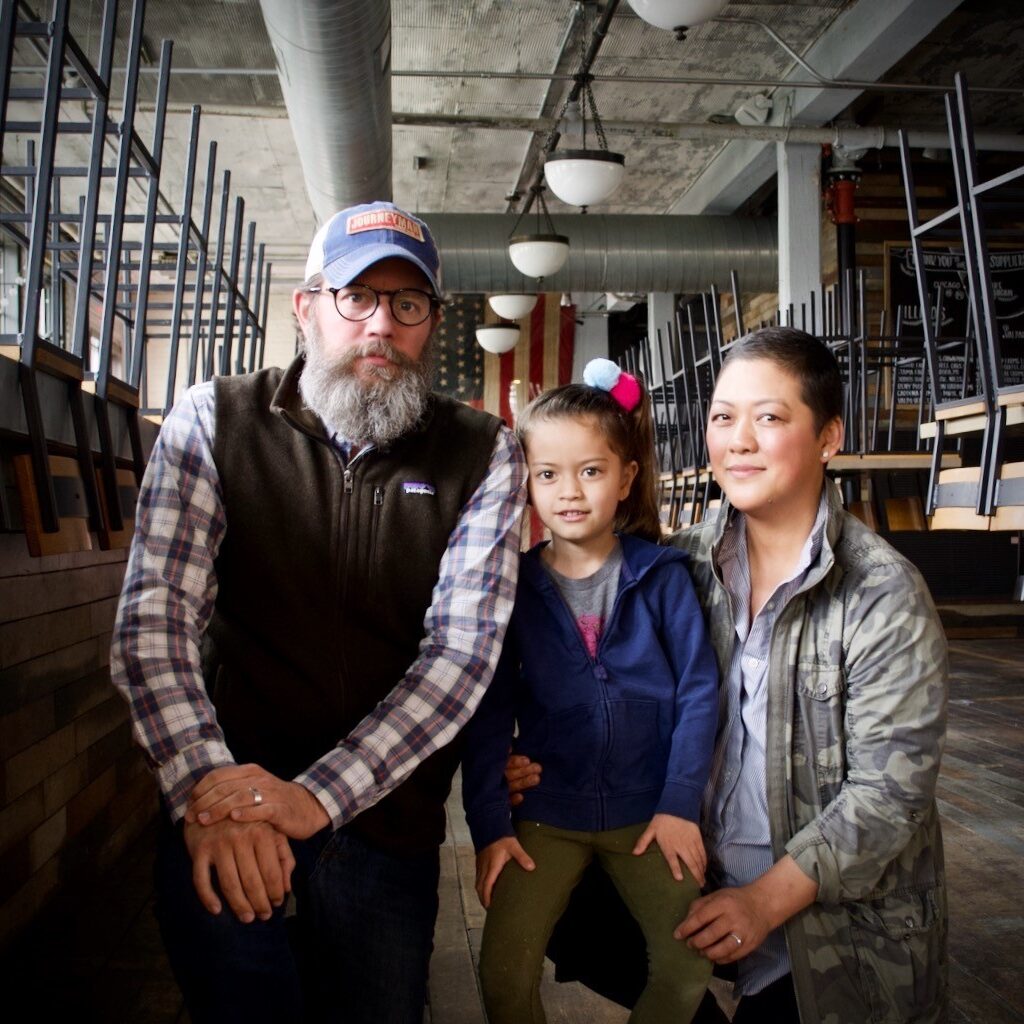
Journeyman Distillery: Bill Welter
Journeyman Distillery with Bill Welter
“When the family business was sold in 2006, I decide to pursue my own business, which eventually resulted in Journeyman Distillery in 2010.”
Can you give us a bit of background about yourself and how you started in the whiskey industry?
As you know, I grew up working in the family business of banking, which started with my Grandfather in the early 1970s, so entrepreneurship ran in the family, which prompting me to want to start a business of my own.
In 2012, Johanna and I had a daughter that we named Islay. Our hope is that she will work in the family business when she grows up and started off with a name associated with whisky, plus to show the influence of the time I spent living in Scotland. When the family business was sold in 2006, I decide to pursue my own business, which eventually resulted in Journeyman Distillery in 2010. We started making whiskey at the Koval Distillery in Chicago first while renovating our current location in Three Oaks, Michigan.
I lived in Scotland from 2000-01, and my experience with whiskey before that was more like any other kid with little thought of what actually went into making it. I had just graduated from college where I played for Missouri State a Division 1 golf program, so going to Scotland seemed like a natural progression, so it was off to St. Andrew’s. I call it my PhD in golf! I was waiting tables in St. Andrews, to learn more about the game, when I met a guy by the name of Greg Ramsey, who was the barman and a real whisky aficionado. This is where I received a real appreciation of whisky. It dawned on me that, being in Scotland, I was smack dab in the middle of the home of 150 great whisky distilleries! I was on an island the same size as Indiana, but had so many great distilleries and a people that had such a love for their native spirit
I gained a great understanding for the reverence the Scots had for whisky, which turned my head around from what I had learned from the college drinking culture. After coming home to the U.S., I started working at the family banking business, and would later on work in the Chicago restaurant industry with the idea of opening a restaurant of my own. After deciding that the restaurant business was not for me, I circled back with my old friend Greg, who was now starting a distillery of his own in Tasmania, so I went down there for a while to help him get up & running. I spent 8 weeks learning from distilleries on that island, and then came back to Chicago to a kind of paid internship (in that I paid them to be an intern) at Koval trying to learn how to make whiskey, along with reading as much as I could, plus visiting as many other local distilleries as possible.
I had put all my eggs in one basket. I wanted to be part of the family business, so the distillery’s name has a lot to do with life being a journey, with the ups & downs, life is what you make of it, as well as my own actual travels learning the distilling business. With all of this, and local tradesmen, the name Journeyman really has a number of meanings.
Can you tell us about your distillery, and what makes it unique?
I went to Buffalo Trace, where I saw some of their old bottles from the 1800s, which inspired the look of our bottles today. The future home of Journeyman distillery was discovered driving down the street of Three Oaks one day looking for an old factory building. Though I lived in Indiana the laws did not allow for craft distilling, I was very close to the Michigan state line, and visited Three Oaks and the rest is history. I wanted an old factory building to give the feel of an old whiskey brand.
The building is an old buggy whip & corset factory that was owned by the local Temperance Movement leader EK Warren, which gave it a great back story. With annexing the attached buildings, we have over 40,000 square feet including a restaurant, production facility, bar, and 2 3 event spaces. Behind the distillery, we have a replica of the St. Andrew’s putting green that we call Welter’s Folly (scaled down 3x) in honor of my time spent there and to encourage kids and families to get out and play.
We also have 4 rental properties that we use to host bartenders, members of the trade, and visitors. We do great business hosting weddings, corporate events & retreats, plus seasonal artist markets. In October, we will put on a Barrel Aged Beer Festival Called Islay’s barrel out front of the distillery working with local breweries that use our whiskey barrels to age their beer. The barrel aged beer fest raises money for charity. This gets a great attendance!
Are there any little ‘distilling’ secrets you can let us in on?
If I told you I would have to kill you. Joking. Actually, we are one of the few certified organic & kosher distilleries in the world. We have never sourced a drop of whiskey and are grain to glass, which can’t be understated. We wanted the whiskey to be unique to where we are, so not sourced from Kentucky, Indiana, or Tennessee distilleries. That is what Journeyman is.
Whiskey has been phenomenally successful in the United States and around the planet, why do you think this is compared to other spirits?
It’s just better. It’s more complicated, more depth, more complexity. You love the nuances to it and there is a sense of place. You open up a bottle and enjoy the aroma & taste. You just don’t get that from vodka. Plus, there are better stories behind whiskey brands, like Jack Daniels. I am not a rep for Jack Daniels, but I think everyone should visit that distillery, which is like a historic landmark.
In your years in the industry, what have been the biggest surprises you have faced?
That the whole craft distilling industry took off like it did. That was a surprise. When we opened Journeyman in 2010 there weren’t more than 250 distilleries in the U.S., but now there is somewhere between 2000-3000 distilleries. Just surprised that it took off like it did.
What are the big trends that are affecting the whiskey industry at the moment?
I see that competition has dramatically increased, much like what I see in craft brewing.
You see more distilleries/breweries concerned with just selling out the front door instead of getting distribution more than state-wide, making your place a destination. Less worry of haggling with distributors & accounts.
What developments in the whiskey industry most excite you?
We really love the hospitality side of the industry, and feel that it’s one of our greatest strengths and that we have taking the distillery hospitality model further then many distilleries ever have.
We are going to try to do something similar to what we’ve done in Three Oaks in my hometown of Valparaiso, Indiana with a new brewery/distillery/hospitality restaurant and event spaces there. Having lived in Scotland, we even have a homage to a Scottish single malt, so the American single malt category is something we look forward to.
Our family has a farm in Indiana that we have had since the 1930s where we have grain that we started planting in 2015, so we are planning on releasing a 10-year old Farm Whiskey Single Malt using the grain grown on the farm to release in 2025.
What do you see as being the future of whiskey in the short term?
I think craft distilling will retreat in the sense that it becomes what the Aussies call “a cellar door” experience, meaning making the distillery more of a destination place with less of a focus on distribution. I also think that the major brands will become even more dominate in the short term, and with the declining economy and forced closure of many small distilleries around the united states, consumers will be looking for more economical spirits during this time.
Though I think the brands that do make it thru this pandemic will be stronger for it at the other end. They will have withstood a tremendous downturn, but learn some very important lessons in doing so that will benefit that in the long term.
Are there any interesting stories from your time in the whiskey industry that you could share?
I like to tell the story of visiting George Grant at the Glenfarclas Distillery. I wanted to reward my staff so we went to Scotland with our distilling team. George welcomed our distilling team and the guys at that distillery were just above and beyond friendly and welcoming.
George took us to one of his warehouses to look at casks from the 1950s & 60s. He blew our minds when he took a whisky thief and shared whiskies straight from casks of 60-year old single malt. George Grant and their family distillery is a model or ours in that they have created a multigenerational family owned and operated business of which we hope to replicate. George pointed out that the whisky in the 1950-60’s casks were at one time worth next to nothing, but at other times had significant value which reinforced with me the significant risks associated with the whisky business.
Our time with George was great, and his advice that this business can be very good to you but can have major pitfalls, still rings true to me, especially during these times.
Why do you use the Glencairn Glass in your business and what makes it so special?
Like a lot of things, when you are looking to have the best whiskey experience possible, you want to use the best glass available. Glencairn has been around for 20 years and has not only survived but grown during all those years, so you know it’s great.
We want our visitors drinking from the Glencairn Glass, and it being a family business, we respect that. The Davidson Family is great, and we support family businesses. We feel that it has been a mutually beneficial relationship and Marty Duffy is the BOMB!
To find out more about Journeyman Distillery visit their website here.

Copper Fox Distillery: Rick Wasmund

Copperfox Distillery with Rock Wasmund
“I was always a fan of whiskey as well as very attuned to the fruit aromas of various wood.”
Can you give us a bit of background about yourself and how you started in the whiskey industry?
Born in Rochester, NY but moved to Virginia after school. After school I worked as a Certified financial planner. I was always a fan of whiskey as well as very attuned to the fruit aromas of various wood. Inspired by a Johnnie Walker tasting in NY where they were waxing on about the alluring smell of peated malt, it got me think that I wanted to check out grain smoked with fruit wood. This was 1999, when I was 40 years old.
I was living in Virgina at the time, where there were a lot of old apple orchards, so naturally I thought an old apple factory would make for an ideal location for my first distillery. We incorporated in 2002, with a number of fits & starts, but finally moved into the Sperryville location in November 2004, then started distilling in 2005.
In 2010, I married, started a family and we all lived above the distillery. In 2015, we started a second distillery at an old motel complex in Williamsburg, VA that has 10 different buildings!
Can you tell us about your distillery, and what makes it unique?
The Sperryville distillery is an old apple factory where we still malt our own barley by hand using fruit wood smoke, plus mature our whiskey using applewood, peachwood & oak wood chips that dangle in the spirits through a hole in the top of the barrels (this may account for an Angels’ Share of up to 20%, but a beautiful whiskey).
Our Williamsburg distillery is an old motel that we converted, and now has a malting floor, a speakeasy, a tasting room, a built-in swimming pool, and an insulated barrelhouse (much like the warmer barrelhouses of India), and a string of old motel rooms that may be used for hospitality spaces in the future. We are within a mile of the famed William & Mary University.
Are there any little ‘distilling’ secrets you can let us in on?
There are no “secrets”. (wink-wink). If I told you they wouldn’t be a secret, now would they? Other than start with great clean grain. We used to work with a local farmer, but he passed away. Now we work with his family to source our grain.
Whiskey has been phenomenally successful in the United States and around the planet, why do you think this is compared to other spirits?
Ummm, because it’s delicious?
In your years in the industry, what have been the biggest surprises you have faced?
The number of people who don’t know by now how whiskey is made or do not understand the difference between Bourbon, Scotch and other styles of whiskey.
What are the big trends that are affecting the whiskey industry at the moment?
Ready-to-drinks seemed hot last year, and should be this year as well.
Are there any interesting stories from your time in the whiskey industry that you could share?
Love to give a shout out to way back in 2000, when I went to Scotland to learn how to malt some barley, and where I ran into the legendary distiller Jim McEwan. Jim encouraged me to follow my mission saying, “You got to do it”. Speaking with him made distilling a calling! I knew then that I just had to embrace my destiny.
What developments in the whiskey industry most excite you?
I like seeing all these little distilleries making it, plus what the big guys are coming up with. It’s just great being part of the larger distilling community.
What do you see as being the future of whiskey in the short term?
The future seems bright enough. It is delicious!
Why do you use the Glencairn Glass in your business and what makes it so special?
Glencairn is the epitome of whisky glasses! We want to be associated with the best, so why not use the best glassware. Of course, it enhances the whole experience and customers appreciate that we use them.
To find out more about Copperfox distillery visit here.
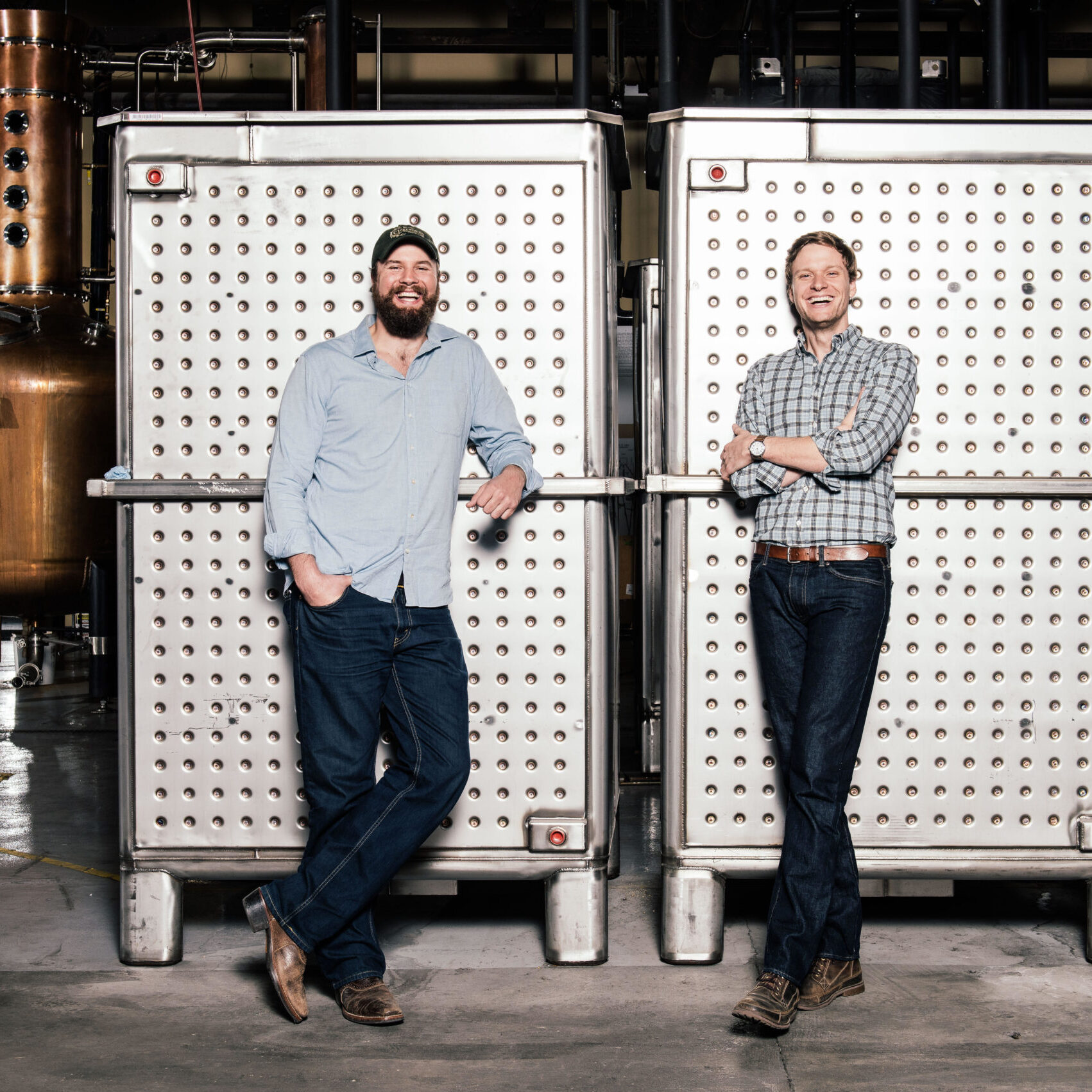
Nelsons Green Brier: Andy Nelson
Nelsons Green Brier: Andy Nelson
“Our most immediately identifying uniqueness is that our Great-Grandfather was one of the first to produce Tennessee whiskey”
Can you give us a bit of background about yourself and how you started in the whiskey industry?
My brother & I started in this business by accident in a way. We discovered our family’s history in the whiskey biz and felt that is was such an intriguing story & history that we needed to revive it. I was a year out of college and had an internship at the Country Music Association while Charlie was still in college.
This is when we had the realization that we had to start it back up again. We took a handful of routes to research it, including interviewing family members and searching state & city archives, as well as the Greenbrier Historical Society.
We originally were going to build on the site of the first distillery, but it proved to be too impractical when we had no money in the first place.
Can you tell us about your distillery, and what makes it unique?
Our most immediately identifying uniqueness is that our Great-Great-Great-Grandfather was one who produced the Original Tennessee whiskey. He was a merchant & bottler who ended up purchasing the distillery where he sourced his spirit.
He was a contemporary of a couple other well known Tennessee Whiskey makers in George Dickel and Jack Daniel, though Jack was a bit younger and George a bit older. We still have some unopened bottles of the original Green Brier Tennessee Whiskey and other brands that Chas. produced.
The brand started in 1860, he bought the distillery in 1870 and we restarted the company in 2012, with the distillery opening in late 2014 in Nashville.
Are there any little ‘distilling’ secrets you can let us in on?
One secret I will say without diminishing our own process, is that distilling is not rocket science.
I think it’s crazy when people make too much of a thing out of it.
I find the simpler the better.
Whiskey has been phenomenally successful in the United States and around the planet, why do you think this is compared to other spirits?
I think because of the inherent soul of a whiskey compared to a vodka.
There is no romance or history or character therefore soul in a vodka or gin compared to a whiskey. You just get so much more out of a whiskey.
In your years in the industry, what have been the biggest surprises you have faced?
The biggest surprise has been fun, but it is the camaraderie with the distilling community. Sales folks are another matter, but distillers have been very friendly and willing to share information, and it’s very refreshing.
What are the big trends that are affecting the whiskey industry at the moment?
Distilleries producing canned cocktails has been huge. I love the movement to create an American single malt category and don’t seeing that going away.
That should be a popular category in the future.
Are there any interesting stories from your time in the whiskey industry that you could share?
We have had a weird eclectic mix of celebrities stop by the distillery. Tedeschi Trucks Band has become friends of the distillery, along with Zac Brown, Vincent Neal Emerson, The Wood Brothers, Jon Hamm of Mad Men stopped in though he doesn’t drink anymore, plus many more.
Also hanging out with distillers at the various distiller conventions (i.e. ADI & ACSA) can yield some rowdy and interesting stories.
What developments in the whiskey industry most excite you?
The American single malt movement. That is a big deal for the U.S.
Also, the overall innovation taking place around the industry. Barrel finishing is great to see as well.
What do you see as being the future of whiskey in the short term?
Hard to say. In one word, innovation.
The classic will always stay, but innovation is a thing!
Why do you use the Glencairn Glass in your business and what makes it so special?
Gosh & schucks! I am so glad that you asked. We used them because they are beautiful & functional. They allow you to nose a whiskey like no other glass.
It is like a work of art unto themselves. Visitors comment on them quite a bit and we talk them up. The Glencairn Glass allows our whiskeys to really shine.
To find out more about Nelson’s Green Brier visit here.