
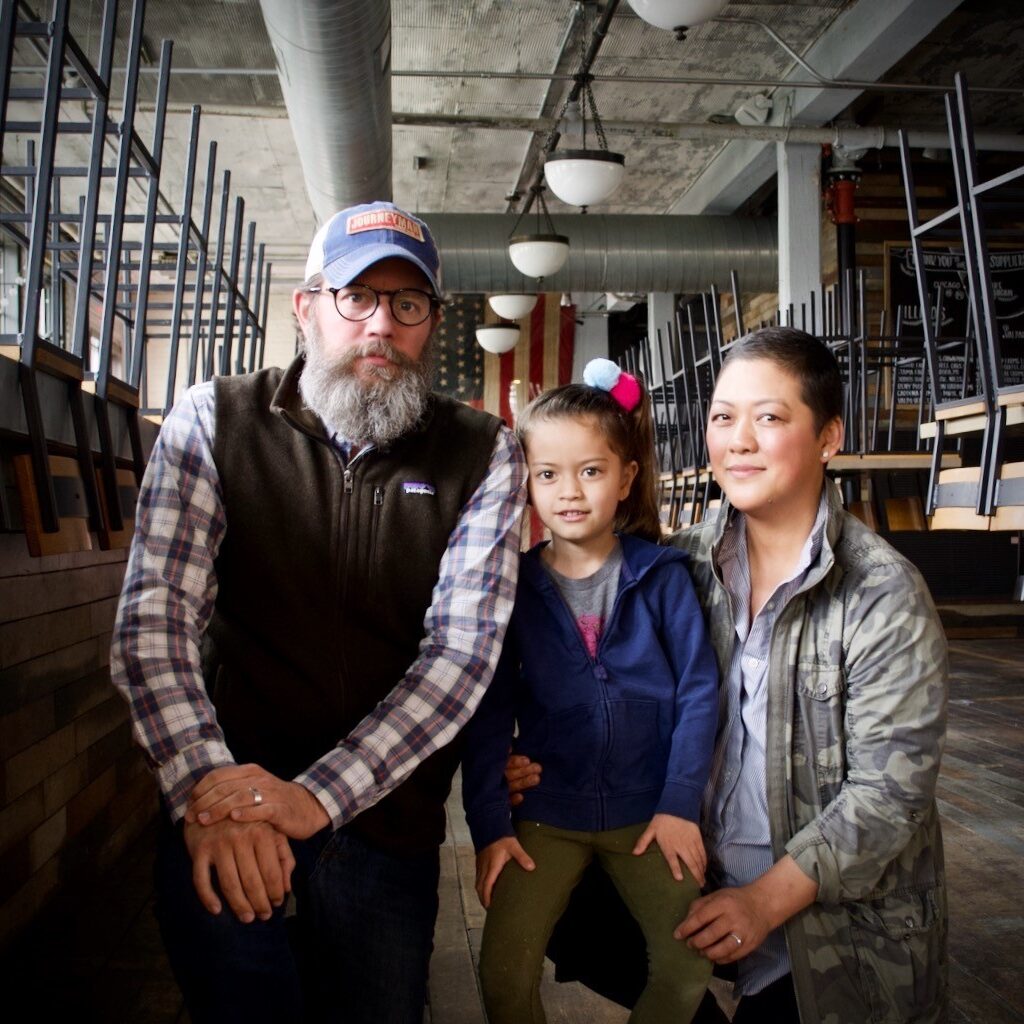
Journeyman Distillery: Bill Welter
Journeyman Distillery with Bill Welter




“When the family business was sold in 2006, I decide to pursue my own business, which eventually resulted in Journeyman Distillery in 2010.”
Can you give us a bit of background about yourself and how you started in the whiskey industry?
As you know, I grew up working in the family business of banking, which started with my Grandfather in the early 1970s, so entrepreneurship ran in the family, which prompting me to want to start a business of my own.
In 2012, Johanna and I had a daughter that we named Islay. Our hope is that she will work in the family business when she grows up and started off with a name associated with whisky, plus to show the influence of the time I spent living in Scotland. When the family business was sold in 2006, I decide to pursue my own business, which eventually resulted in Journeyman Distillery in 2010. We started making whiskey at the Koval Distillery in Chicago first while renovating our current location in Three Oaks, Michigan.
I lived in Scotland from 2000-01, and my experience with whiskey before that was more like any other kid with little thought of what actually went into making it. I had just graduated from college where I played for Missouri State a Division 1 golf program, so going to Scotland seemed like a natural progression, so it was off to St. Andrew’s. I call it my PhD in golf! I was waiting tables in St. Andrews, to learn more about the game, when I met a guy by the name of Greg Ramsey, who was the barman and a real whisky aficionado. This is where I received a real appreciation of whisky. It dawned on me that, being in Scotland, I was smack dab in the middle of the home of 150 great whisky distilleries! I was on an island the same size as Indiana, but had so many great distilleries and a people that had such a love for their native spirit
I gained a great understanding for the reverence the Scots had for whisky, which turned my head around from what I had learned from the college drinking culture. After coming home to the U.S., I started working at the family banking business, and would later on work in the Chicago restaurant industry with the idea of opening a restaurant of my own. After deciding that the restaurant business was not for me, I circled back with my old friend Greg, who was now starting a distillery of his own in Tasmania, so I went down there for a while to help him get up & running. I spent 8 weeks learning from distilleries on that island, and then came back to Chicago to a kind of paid internship (in that I paid them to be an intern) at Koval trying to learn how to make whiskey, along with reading as much as I could, plus visiting as many other local distilleries as possible.
I had put all my eggs in one basket. I wanted to be part of the family business, so the distillery’s name has a lot to do with life being a journey, with the ups & downs, life is what you make of it, as well as my own actual travels learning the distilling business. With all of this, and local tradesmen, the name Journeyman really has a number of meanings.
Can you tell us about your distillery, and what makes it unique?
I went to Buffalo Trace, where I saw some of their old bottles from the 1800s, which inspired the look of our bottles today. The future home of Journeyman distillery was discovered driving down the street of Three Oaks one day looking for an old factory building. Though I lived in Indiana the laws did not allow for craft distilling, I was very close to the Michigan state line, and visited Three Oaks and the rest is history. I wanted an old factory building to give the feel of an old whiskey brand.
The building is an old buggy whip & corset factory that was owned by the local Temperance Movement leader EK Warren, which gave it a great back story. With annexing the attached buildings, we have over 40,000 square feet including a restaurant, production facility, bar, and 2 3 event spaces. Behind the distillery, we have a replica of the St. Andrew’s putting green that we call Welter’s Folly (scaled down 3x) in honor of my time spent there and to encourage kids and families to get out and play.
We also have 4 rental properties that we use to host bartenders, members of the trade, and visitors. We do great business hosting weddings, corporate events & retreats, plus seasonal artist markets. In October, we will put on a Barrel Aged Beer Festival Called Islay’s barrel out front of the distillery working with local breweries that use our whiskey barrels to age their beer. The barrel aged beer fest raises money for charity. This gets a great attendance!
Are there any little ‘distilling’ secrets you can let us in on?
If I told you I would have to kill you. Joking. Actually, we are one of the few certified organic & kosher distilleries in the world. We have never sourced a drop of whiskey and are grain to glass, which can’t be understated. We wanted the whiskey to be unique to where we are, so not sourced from Kentucky, Indiana, or Tennessee distilleries. That is what Journeyman is.
Whiskey has been phenomenally successful in the United States and around the planet, why do you think this is compared to other spirits?
It’s just better. It’s more complicated, more depth, more complexity. You love the nuances to it and there is a sense of place. You open up a bottle and enjoy the aroma & taste. You just don’t get that from vodka. Plus, there are better stories behind whiskey brands, like Jack Daniels. I am not a rep for Jack Daniels, but I think everyone should visit that distillery, which is like a historic landmark.
In your years in the industry, what have been the biggest surprises you have faced?
That the whole craft distilling industry took off like it did. That was a surprise. When we opened Journeyman in 2010 there weren’t more than 250 distilleries in the U.S., but now there is somewhere between 2000-3000 distilleries. Just surprised that it took off like it did.
What are the big trends that are affecting the whiskey industry at the moment?
I see that competition has dramatically increased, much like what I see in craft brewing.
You see more distilleries/breweries concerned with just selling out the front door instead of getting distribution more than state-wide, making your place a destination. Less worry of haggling with distributors & accounts.
What developments in the whiskey industry most excite you?
We really love the hospitality side of the industry, and feel that it’s one of our greatest strengths and that we have taking the distillery hospitality model further then many distilleries ever have.
We are going to try to do something similar to what we’ve done in Three Oaks in my hometown of Valparaiso, Indiana with a new brewery/distillery/hospitality restaurant and event spaces there. Having lived in Scotland, we even have a homage to a Scottish single malt, so the American single malt category is something we look forward to.
Our family has a farm in Indiana that we have had since the 1930s where we have grain that we started planting in 2015, so we are planning on releasing a 10-year old Farm Whiskey Single Malt using the grain grown on the farm to release in 2025.
What do you see as being the future of whiskey in the short term?
I think craft distilling will retreat in the sense that it becomes what the Aussies call “a cellar door” experience, meaning making the distillery more of a destination place with less of a focus on distribution. I also think that the major brands will become even more dominate in the short term, and with the declining economy and forced closure of many small distilleries around the united states, consumers will be looking for more economical spirits during this time.
Though I think the brands that do make it thru this pandemic will be stronger for it at the other end. They will have withstood a tremendous downturn, but learn some very important lessons in doing so that will benefit that in the long term.
Are there any interesting stories from your time in the whiskey industry that you could share?
I like to tell the story of visiting George Grant at the Glenfarclas Distillery. I wanted to reward my staff so we went to Scotland with our distilling team. George welcomed our distilling team and the guys at that distillery were just above and beyond friendly and welcoming.
George took us to one of his warehouses to look at casks from the 1950s & 60s. He blew our minds when he took a whisky thief and shared whiskies straight from casks of 60-year old single malt. George Grant and their family distillery is a model or ours in that they have created a multigenerational family owned and operated business of which we hope to replicate. George pointed out that the whisky in the 1950-60’s casks were at one time worth next to nothing, but at other times had significant value which reinforced with me the significant risks associated with the whisky business.
Our time with George was great, and his advice that this business can be very good to you but can have major pitfalls, still rings true to me, especially during these times.
Why do you use the Glencairn Glass in your business and what makes it so special?
Like a lot of things, when you are looking to have the best whiskey experience possible, you want to use the best glass available. Glencairn has been around for 20 years and has not only survived but grown during all those years, so you know it’s great.
We want our visitors drinking from the Glencairn Glass, and it being a family business, we respect that. The Davidson Family is great, and we support family businesses. We feel that it has been a mutually beneficial relationship and Marty Duffy is the BOMB!
To find out more about Journeyman Distillery visit their website here.


Copper Fox Distillery: Rick Wasmund

Copperfox Distillery with Rock Wasmund
“I was always a fan of whiskey as well as very attuned to the fruit aromas of various wood.”
Can you give us a bit of background about yourself and how you started in the whiskey industry?
Born in Rochester, NY but moved to Virginia after school. After school I worked as a Certified financial planner. I was always a fan of whiskey as well as very attuned to the fruit aromas of various wood. Inspired by a Johnnie Walker tasting in NY where they were waxing on about the alluring smell of peated malt, it got me think that I wanted to check out grain smoked with fruit wood. This was 1999, when I was 40 years old.
I was living in Virgina at the time, where there were a lot of old apple orchards, so naturally I thought an old apple factory would make for an ideal location for my first distillery. We incorporated in 2002, with a number of fits & starts, but finally moved into the Sperryville location in November 2004, then started distilling in 2005.
In 2010, I married, started a family and we all lived above the distillery. In 2015, we started a second distillery at an old motel complex in Williamsburg, VA that has 10 different buildings!
Can you tell us about your distillery, and what makes it unique?
The Sperryville distillery is an old apple factory where we still malt our own barley by hand using fruit wood smoke, plus mature our whiskey using applewood, peachwood & oak wood chips that dangle in the spirits through a hole in the top of the barrels (this may account for an Angels’ Share of up to 20%, but a beautiful whiskey).
Our Williamsburg distillery is an old motel that we converted, and now has a malting floor, a speakeasy, a tasting room, a built-in swimming pool, and an insulated barrelhouse (much like the warmer barrelhouses of India), and a string of old motel rooms that may be used for hospitality spaces in the future. We are within a mile of the famed William & Mary University.
Are there any little ‘distilling’ secrets you can let us in on?
There are no “secrets”. (wink-wink). If I told you they wouldn’t be a secret, now would they? Other than start with great clean grain. We used to work with a local farmer, but he passed away. Now we work with his family to source our grain.
Whiskey has been phenomenally successful in the United States and around the planet, why do you think this is compared to other spirits?
Ummm, because it’s delicious?
In your years in the industry, what have been the biggest surprises you have faced?
The number of people who don’t know by now how whiskey is made or do not understand the difference between Bourbon, Scotch and other styles of whiskey.
What are the big trends that are affecting the whiskey industry at the moment?
Ready-to-drinks seemed hot last year, and should be this year as well.
Are there any interesting stories from your time in the whiskey industry that you could share?
Love to give a shout out to way back in 2000, when I went to Scotland to learn how to malt some barley, and where I ran into the legendary distiller Jim McEwan. Jim encouraged me to follow my mission saying, “You got to do it”. Speaking with him made distilling a calling! I knew then that I just had to embrace my destiny.
What developments in the whiskey industry most excite you?
I like seeing all these little distilleries making it, plus what the big guys are coming up with. It’s just great being part of the larger distilling community.
What do you see as being the future of whiskey in the short term?
The future seems bright enough. It is delicious!
Why do you use the Glencairn Glass in your business and what makes it so special?
Glencairn is the epitome of whisky glasses! We want to be associated with the best, so why not use the best glassware. Of course, it enhances the whole experience and customers appreciate that we use them.
To find out more about Copperfox distillery visit here.
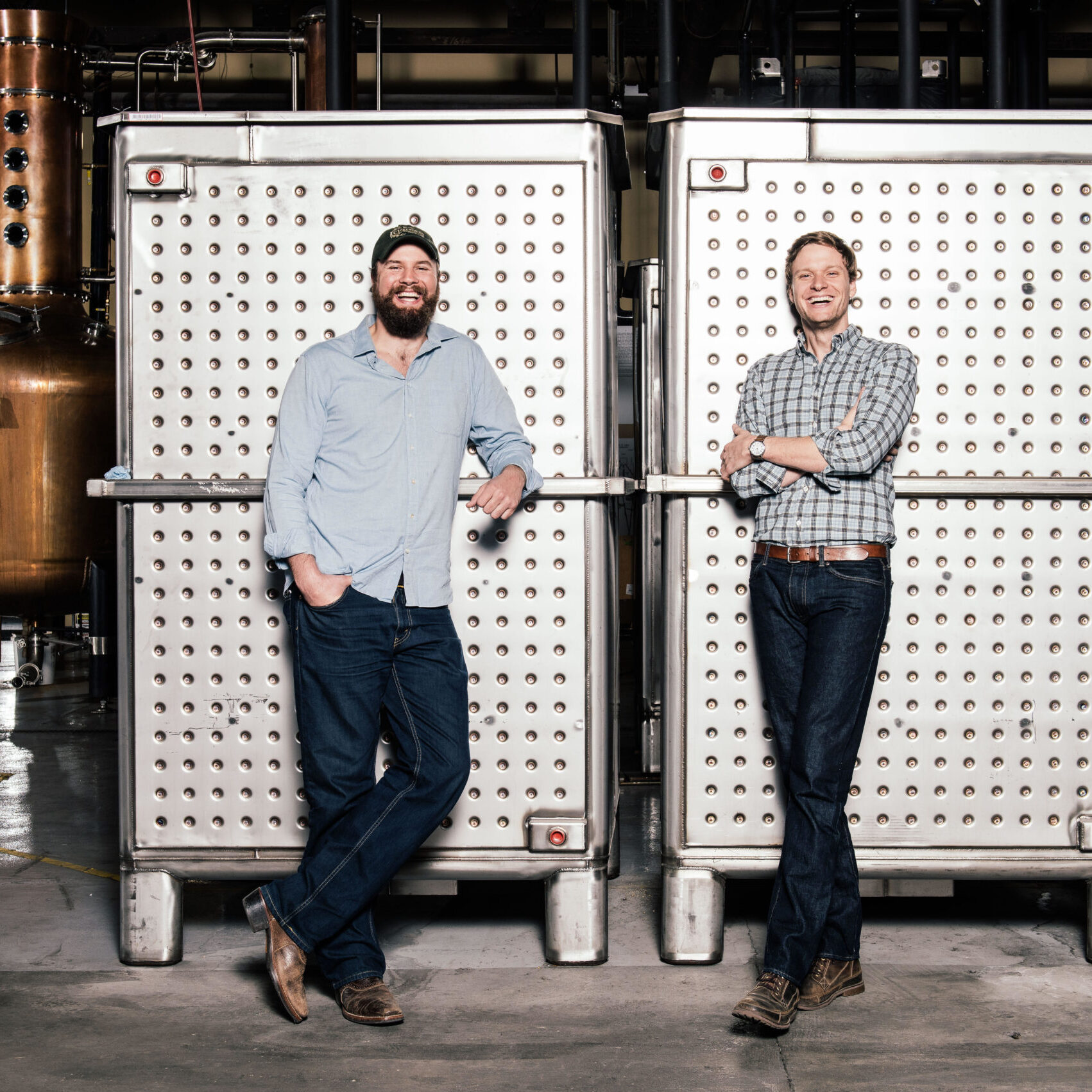
Nelsons Green Brier: Andy Nelson

Nelsons Green Brier: Andy Nelson
“Our most immediately identifying uniqueness is that our Great-Grandfather was one of the first to produce Tennessee whiskey”
Can you give us a bit of background about yourself and how you started in the whiskey industry?
My brother & I started in this business by accident in a way. We discovered our family’s history in the whiskey biz and felt that is was such an intriguing story & history that we needed to revive it. I was a year out of college and had an internship at the Country Music Association while Charlie was still in college.
This is when we had the realization that we had to start it back up again. We took a handful of routes to research it, including interviewing family members and searching state & city archives, as well as the Greenbrier Historical Society.
We originally were going to build on the site of the first distillery, but it proved to be too impractical when we had no money in the first place.
Can you tell us about your distillery, and what makes it unique?
Our most immediately identifying uniqueness is that our Great-Great-Great-Grandfather was one who produced the Original Tennessee whiskey. He was a merchant & bottler who ended up purchasing the distillery where he sourced his spirit.
He was a contemporary of a couple other well known Tennessee Whiskey makers in George Dickel and Jack Daniel, though Jack was a bit younger and George a bit older. We still have some unopened bottles of the original Green Brier Tennessee Whiskey and other brands that Chas. produced.
The brand started in 1860, he bought the distillery in 1870 and we restarted the company in 2012, with the distillery opening in late 2014 in Nashville.
Are there any little ‘distilling’ secrets you can let us in on?
One secret I will say without diminishing our own process, is that distilling is not rocket science.
I think it’s crazy when people make too much of a thing out of it.
I find the simpler the better.
Whiskey has been phenomenally successful in the United States and around the planet, why do you think this is compared to other spirits?
I think because of the inherent soul of a whiskey compared to a vodka.
There is no romance or history or character therefore soul in a vodka or gin compared to a whiskey. You just get so much more out of a whiskey.
In your years in the industry, what have been the biggest surprises you have faced?
The biggest surprise has been fun, but it is the camaraderie with the distilling community. Sales folks are another matter, but distillers have been very friendly and willing to share information, and it’s very refreshing.
What are the big trends that are affecting the whiskey industry at the moment?
Distilleries producing canned cocktails has been huge. I love the movement to create an American single malt category and don’t seeing that going away.
That should be a popular category in the future.
Are there any interesting stories from your time in the whiskey industry that you could share?
We have had a weird eclectic mix of celebrities stop by the distillery. Tedeschi Trucks Band has become friends of the distillery, along with Zac Brown, Vincent Neal Emerson, The Wood Brothers, Jon Hamm of Mad Men stopped in though he doesn’t drink anymore, plus many more.
Also hanging out with distillers at the various distiller conventions (i.e. ADI & ACSA) can yield some rowdy and interesting stories.
What developments in the whiskey industry most excite you?
The American single malt movement. That is a big deal for the U.S.
Also, the overall innovation taking place around the industry. Barrel finishing is great to see as well.
What do you see as being the future of whiskey in the short term?
Hard to say. In one word, innovation.
The classic will always stay, but innovation is a thing!
Why do you use the Glencairn Glass in your business and what makes it so special?
Gosh & schucks! I am so glad that you asked. We used them because they are beautiful & functional. They allow you to nose a whiskey like no other glass.
It is like a work of art unto themselves. Visitors comment on them quite a bit and we talk them up. The Glencairn Glass allows our whiskeys to really shine.
To find out more about Nelson’s Green Brier visit here.